Despite its placement directly on a large river bed, opportunities to swim in London are highly limited to the paid infrastructures of gym pools, lido’s and the ponds (specifically speaking the Hampstead Heath Ponds). Some of these are so-so but most of them are fairly great. Specifically the outdoor pool at Better Gyms ‘Oasis’ centre (near TCR and Covent Garden), is magical, with a sauna, garden and sunbathing area and even an indoor pool for when it’s too cold. The pool itself is fairly rudimentary and mostly built for laps, but the experience of swimming there is never undercut by a lack of things to do. It almost feels cut out of the yuppie culture of the 80s-90s with its cramped but aspirational sauna and its topless sunbathing balcony. At roughly £5 per entry, for a once every-so-often treat it’s not too expensive.
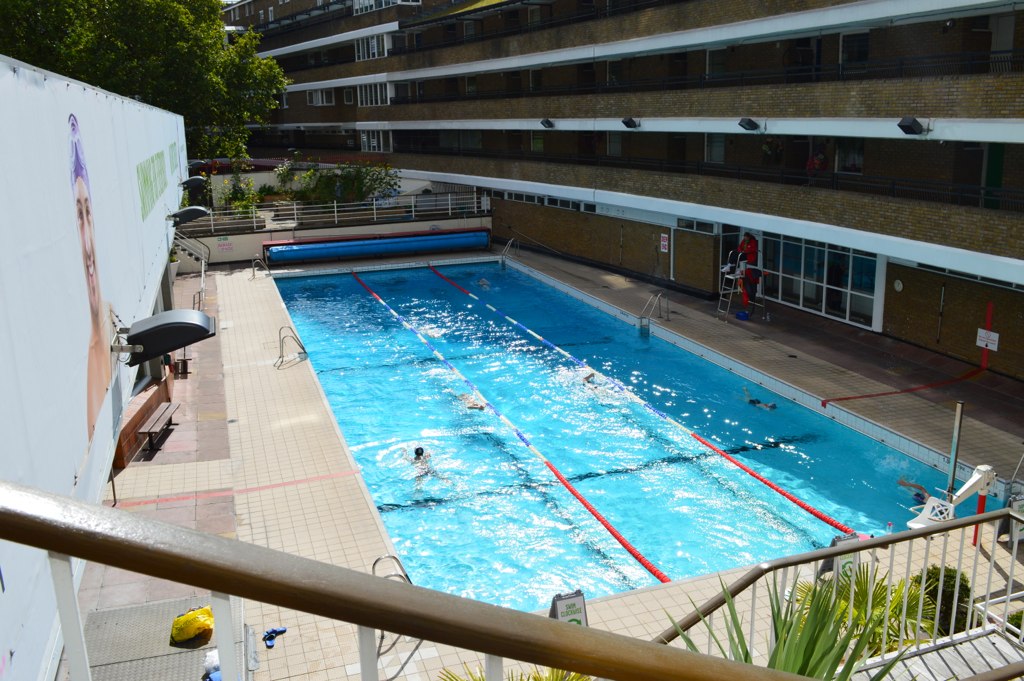
oasis pool
No doubt there are those that can afford to make the trip more regularly either through how they prioritise their budget, having a larger income or memberships. This shapes the social landscape of the space. On most days the pool is frequented by those working locally at various white collar jobs in the city and the chatter reflects that. It’s a great place to hang out and get to know what its like to work and live in London.
Other Better Gyms reflect their more suburban status. Wavelengths in Deptford is a great place for Sauna chat and hearing about the local celebrities. They amplify the social landscape and culture surrounding them, operating as a gathering point for cultural exchange. Like libraries, local stores and other spaces of everyday exchange, they act as, what Ash Amin calls, a ‘micro public’. A site of everyday social and cultural exchange, one which strengthens forms of community building and organising. However, despite this infrastructure being somewhat publicly managed (through the UK council system), these spaces aren’t public, they are spaces of private admission.
The Better brand (legally Greenwich Leisure Ltd) are a success of the private management model in the UK. A social enterprise organisation that grew from managing library and gym infrastructure in Greenwich, to quickly becoming the largest provider of fitness centres in London. Taking over the management and provisioning of social infrastructure from councils struggling to maintain them, they apply commercial strategies to keep them open and functioning, while making sure costs are still somewhat accessible. In terms of this type of privatisation, this is far from the most predatory. The gyms are nice, the spaces clean and the prices low in comparison to their fully private equivalents. All this to say, go use their facilities where you can afford it. They are more than worth it and do still serve a social and community focus.
But they are also emblematic of general changes in social infrastructure in the UK. Councils or government run institutions can’t afford to maintain services and so, rather than looking to provide better infrastructure in order to manage funding across the UK, the solution provided is that it must be privatised. This is visible across a broad range of institutions, from health services to power and water, even the public spaces and parks we gather in.
As observed by philosopher and social critic Simone Weil, we don’t value the social needs represented by our roots to a community and history. A part of the current malaise of rising anxiety, depression and isolation, is due to the way our society dehumanises and denies the need of the soul. We have a government that actively allows the literal starvation of its people, privatising access to housing and even access to reliable sources of food. What then must it think of our social needs, those fulfilled through spaces of social gathering and exchange?
This isn’t to simply move the responsibility over these things to government infrastructures. Shrug our shoulders and say “what could we do in the face of systematic issues?”. No this exchange is mirrored back through how we now view these needs. To trace an obvious contemporary connection to the words of philosopher Byung Chul Han, we live in a society that uses positive reinforcement as a cohesive force. We are encouraged to better ourselves through achievement and competitive factors, hustle culture and fitness, not for the emotional benefits, but to sate a craving to be more than what we were yesterday. The consequence is a lack of time spent seeing oneself reflected in the community that surrounds them. Not speaking competitively, but instead convivially. What if you weren’t unique and instead the same as everyone else and thereby worthy of not needing to always be taking a step forward? That in constantly seeking to move forward we are cognitively elevating and isolating ourselves from those around us, thereby stifling our spiritual need for roots and community.
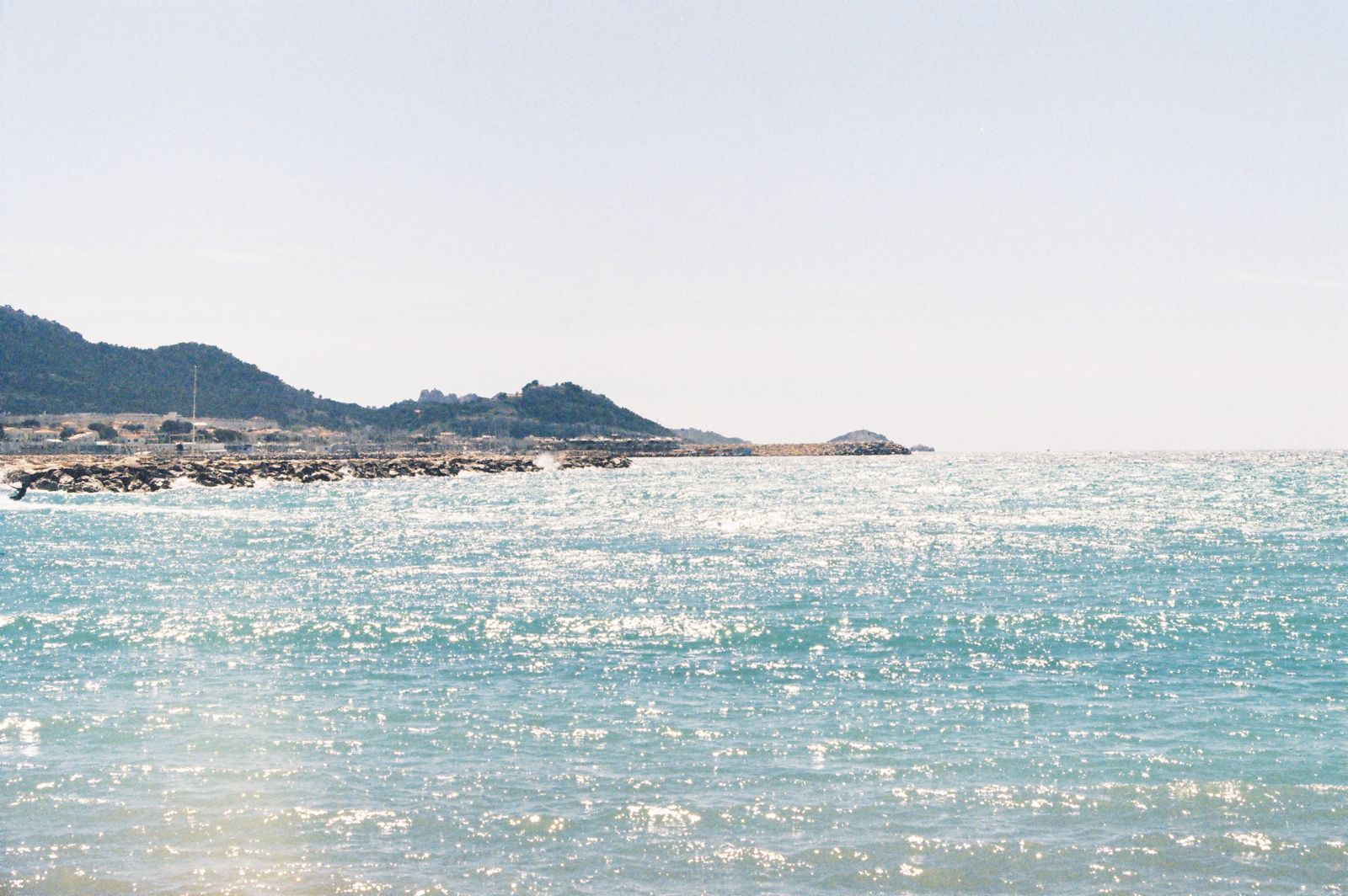
this is the most attractive site on earth
Burgess Park is a large green space located just below Elephant and Castle in South London. In it, there is a fairly large artificially created lake. Currently it’s a private fishing pond leased out to a local fishing group, but speaking to one of the members of that group, he tells me that it was once a community outdoor pool. Kids from the local area would go swimming and hangout on its banks. Oddly I can’t verify this beyond first hand accounts but at some point it was filled with fish and hence was a registered fishing spot and people stopped swimming there. It went from being a public social space provisioning the community to something only accessible to those with a licence.
It’s beautiful that community infrastructure such as what is provided by Better Gyms exists and is still providing a space for connection, however, its privatisation and pay-to-access structure still isolates it to those that can afford to see swimming as less of a luxury and more as a social or spiritual necessity. My first memory comes from a public pool. From a swimming lesson when I was 4, what it felt like to crash into and under the water for the first time. The muffled soundscape of splashing and crashing around me. I still become that kid again when I spend time by the water and it fills a joy that is hard to reproduce outside of the feeling of slipping under the water, feeling the weight of the water and being totally at one with my body.
Maybe it’s silly to pick swimming as a social necessity, but it represents a point of conviviality that can exist outside of capitalist structures. Hanging out by the pool is important. Friends and colleagues more in touch with today’s late teens and early 20 somethings tell me that drinking culture is massively on the decline. People don’t want to go out drinking together anymore. On the one side this is a net good for health. ‘England has an alcohol problem’ has been an international joke for a while, but it really is true. However, there is a large amount of social and community culture in the UK built out of drinking. It was a space to talk and share ideas, political and non-political. Now people seem more interested in the gym, but are people really in community in those spaces? I wouldn’t really know, it’s not my scene, but the descriptions of my friends who paint a bleak picture of people mostly keeping to themselves.
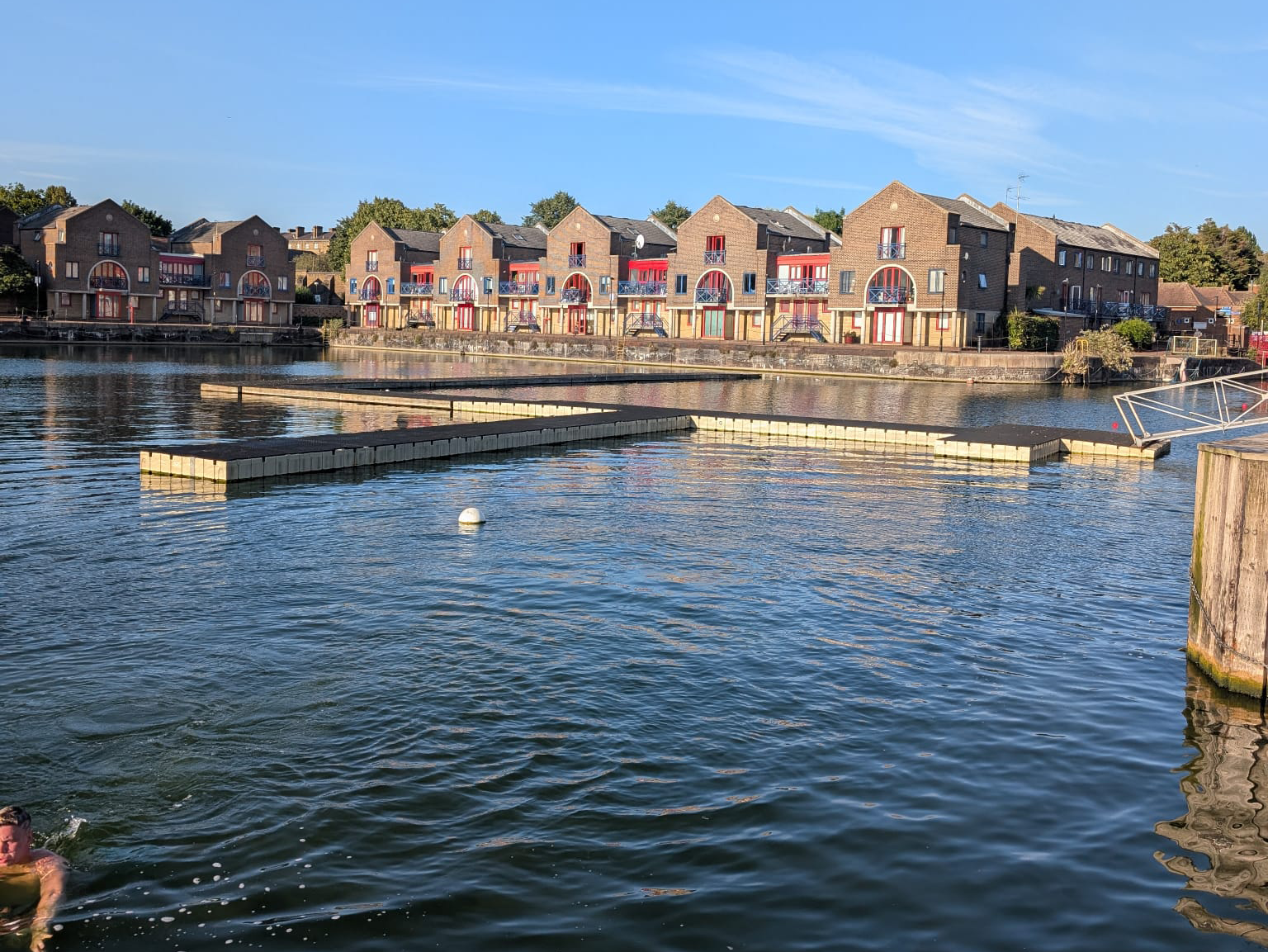
other spaces to swim
Despite the convenience of Better Gyms, my favourite place to swim in London is Shadwell Basin, a small dock just off the Thames, that explicitly bans swimming. The water quality is poor (at best) on a good day and it’s really best not to think about it. Everyday in the summer a random assortment of people from different parts of London gather, listen to music, cook and eat food and jump off the docks into the water below. It’s beautiful. Sometimes I don’t go to swim, just to sit and read in amongst this small community that has little in common beyond wanting a space to gather, swim and hangout by the water. It’s not lack of paid entry that brings me there, but simply how open and free the space feels. It’s never too crowded but also never empty, always buzzing with people excited to hangout and play around the water.
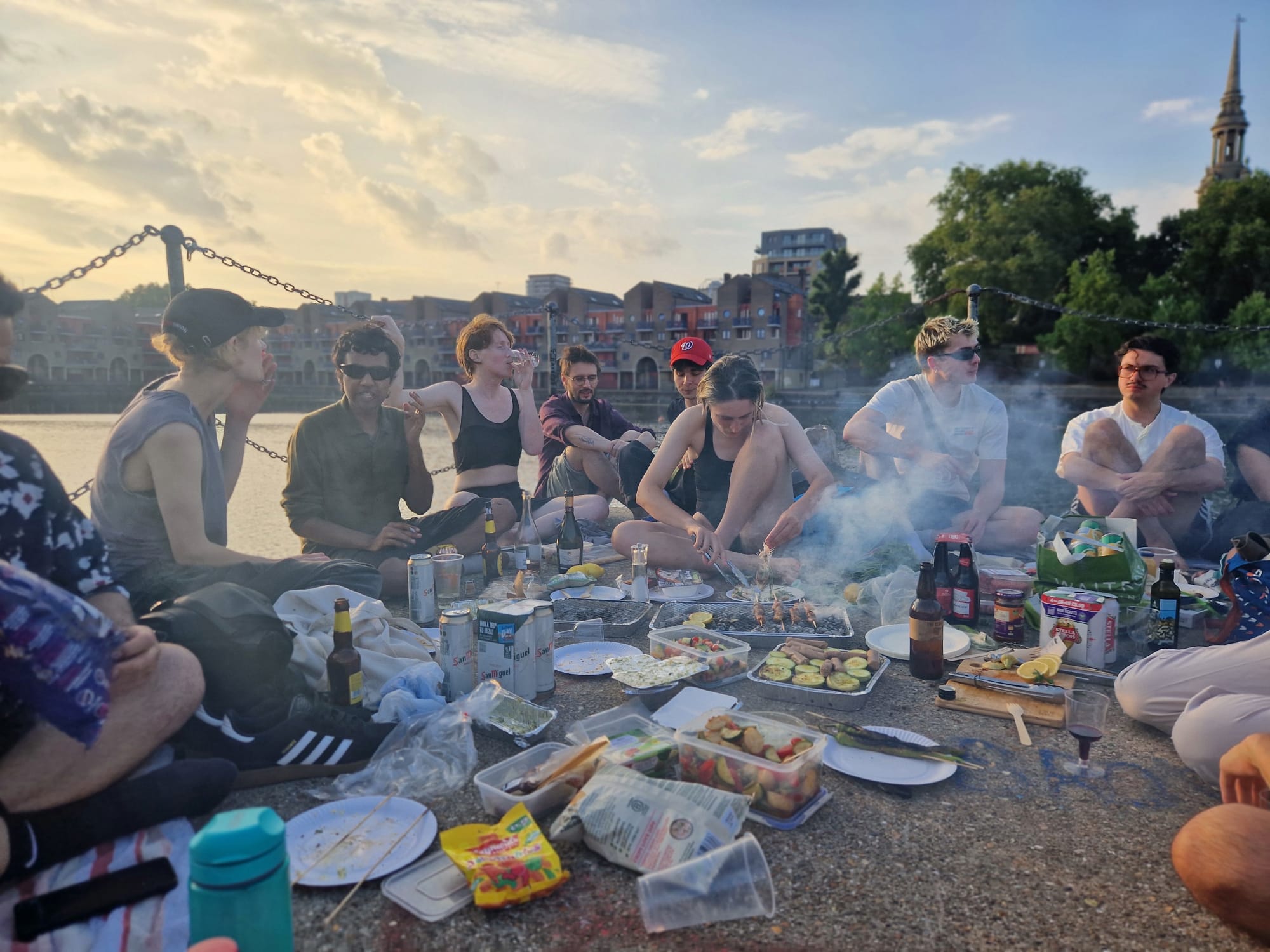
a pool party i had at shadwell basin last year
24.06.2026 - the right to swim
more ->