A few years ago my partner Agnes and I read a text by the game developer Stephen Gillmurphy called “personal aesthetics”, in it he describes the ending of his game “magic wand”. The whole game you pursue the titular “magic wand” and once you get:
“it makes a weird noise and then the world is changed, in a way it’s hard to read as good or bad. Certainly more cluttered - the plains outside are now covered in debris, gigantic heads and hands, pictures of the demiurge. there doesn’t seem like much to choose from between these places, so maybe the only thing you’ve gained is to have seen them both, the old and new, and have the old slide a little further into memory, the secret alchemical medium that can absorb all contradictions.”1
Through this, we began discussing the idea of a landscape of desire2, a framework to refocus and counter the act of constant pursuit heightened by capitalism. The landscape of desire was a way of us mapping our wants in relation to their abstractions. Formatting desire as something multifaceted, seeing it as something that is never just singular, but instead sits in a wider context.
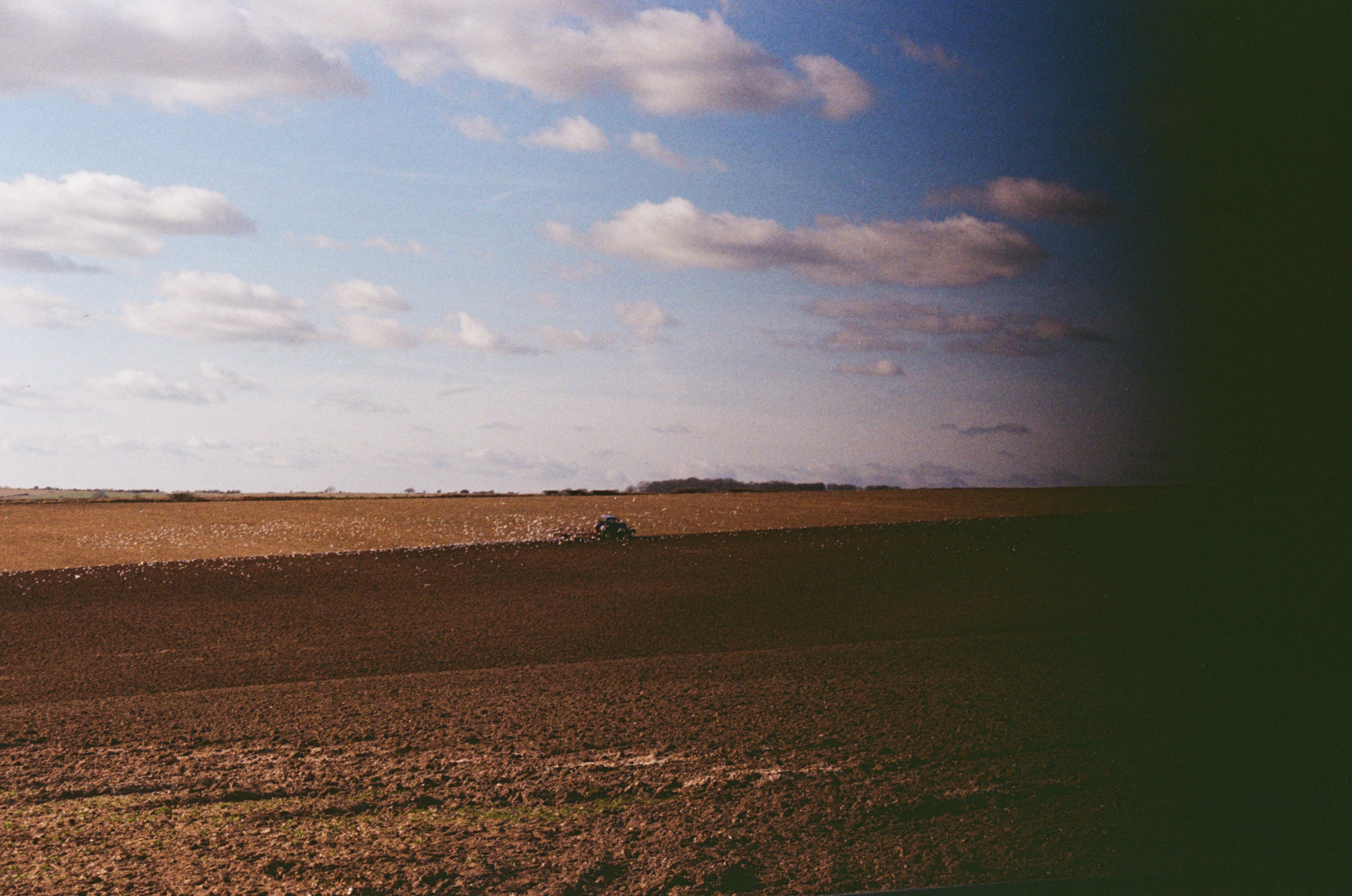
a photo i took back in march 2025 on a gorgeous day down in Surrey
Take eating out. The desire to eat out, even when related around a particular dish or cuisine, is never just a desire for that particular food. Maybe you could be really craving ginger scallion tripe, but you never just stop at one dish. Going out for a meal is not just about the food, it’s the fantasy. You are cooked for, served food, you may have a drink, there may be others around, you are hosted, its a web of different needs and wants being met through the pursuit of a singular object.
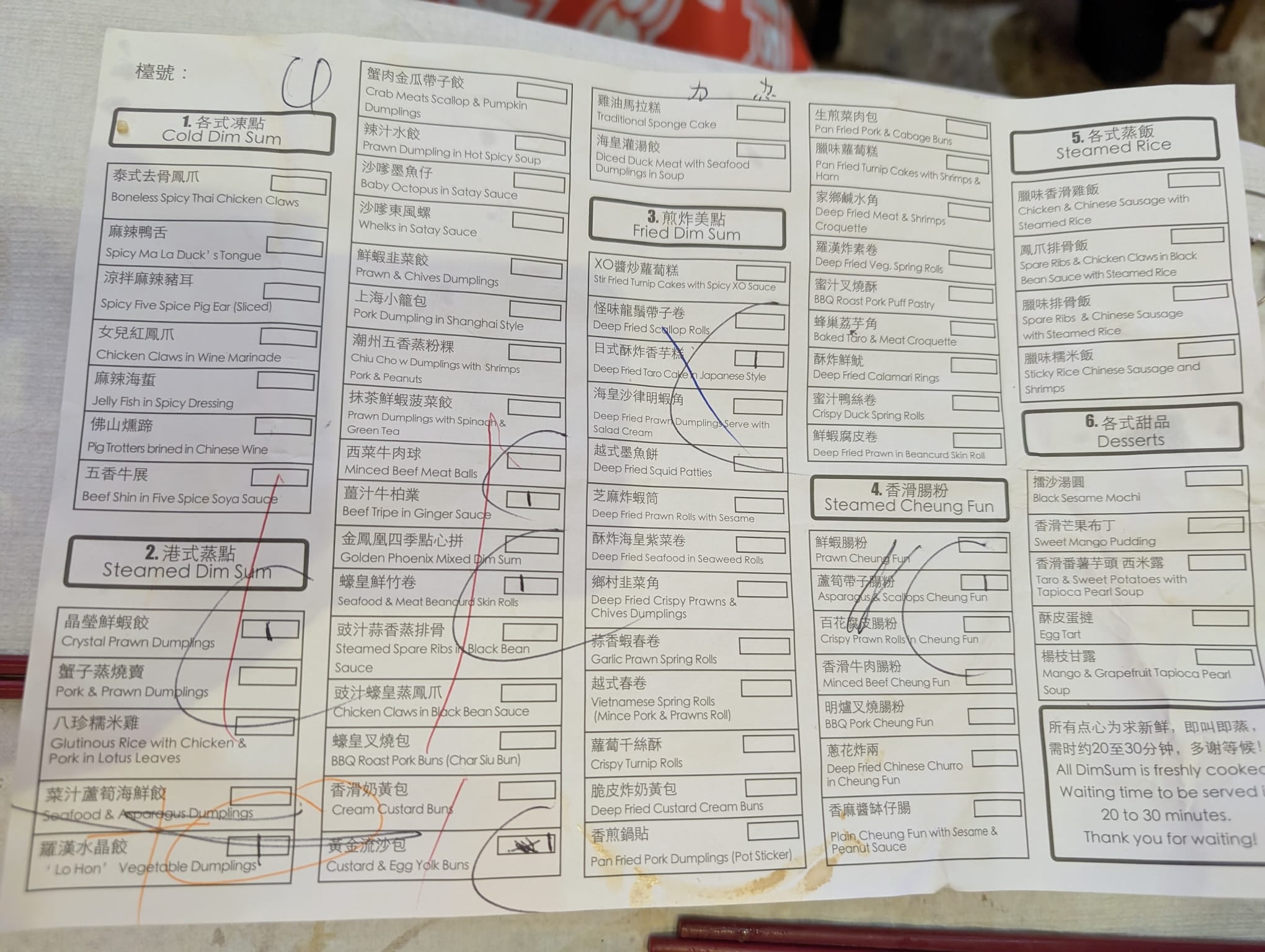
you always add more dishes. please let me know if you have any notes on our order
Recently, I saw the Adam Curtis documentary “The Century of the Self”, which describes the relationship between psychoanalysis and mass-comsumptive capitalism. He attributes the link between luxury goods and objects of desire to the work of Edward Bernays, using psychoanalysis to market objects as cultural signifiers. While I question the simplicity of his framing, something in this documentaries framing of objects as points of desire, helped me formulate a kind of adversary for our ideas around the landscape of desire. Thus I began thinking about the object of desire.
In a series of lectures / workshops I’ve been giving recently, looking at my practice, technology and social art, I’ve felt weirdly protective over the prospect of pruning a particularly dense section talking about authentic desire3. I’d first formulated the bones of this while talking on a panel for my friend Wassim at Newspeak house in 2025. I was trying to get at what felt libratory and revolutionary in the illegibility of transness, tying the act of remaking one’s gender, how that renders you illegible to certain bureaucratic systems, to its roots in breaking down social archetypes. I wanted to make the point that capitalism is very good at repackaging revolutionary acts in a way that allows it to profit from these revolutions, but struggles fundamentally with certain aspects of trans identity. There is an incompatible tension and in that tension it must jettison core parts of these identities, otherwise it could threaten the system as a whole. To truly consume and repackage transness through the lens of capital, the whole system would have to shift into accommodating new forms of bureaucratic processes that would alter capitalism4 away from its core motives. To truly integrate trans people into contemporary society, we would have to remake so much of modern bureaucratic processes, contemporary psychology, understandings of personhood, infrastructure (such as bathrooms, bathhouses, gyms), marketing trends and more. Transness represents a schism from this social order, its a break and movement away from social pressures and placements, to pursue a more authentic relation to the self and thereby desire. This isn’t to say capitalism can’t find a way, I’m almost certain it can, or that it has tried and somewhat succeeded, but instead that it struggles to digest all of it. It can’t and looking for why it can’t feels politically important.
So in formulating this argument towards authentic desire, I looked at the sale of celebrities as emulatory status symbols. Forms of celebrity have been around for far longer than the smallest instincts of capitalism, but I wanted to draw the relationships around celebrities, products and desire, specifically focusing on what we seek from these relationships. What is it we truely want when we say, for example, that we want to emulate and be like writer, cartoonist and artist Tove Jansson5. What am I after from this relationship? Surely I don’t want her well documented issues with her father, the difficulties of pursuing queer love in 1950’s Finland or her struggles to prove herself as more than just a cartoonist. No, if I look deeper, I want to emlate her wit and intelligence, how accessible and earnest she is in communicating complex themes, always relating them to personal moments and everyday life. I want an imagined version of her relationship to living, how she travelled and loved. I want to live through the photographs of her and her partner Tooti, swimming in the sea and off travelling the world. I don’t want her life, I want my own to emulate something of the landscape of hers. A long term loving and consistent partnership, travel and excitement, an imagined confidence in my own ideas and capacity to communicate it through the world of the everyday. Through this analysis, I can draw a more authentic relationship to what it is that I truly want from the world, and open it up to contain something more.
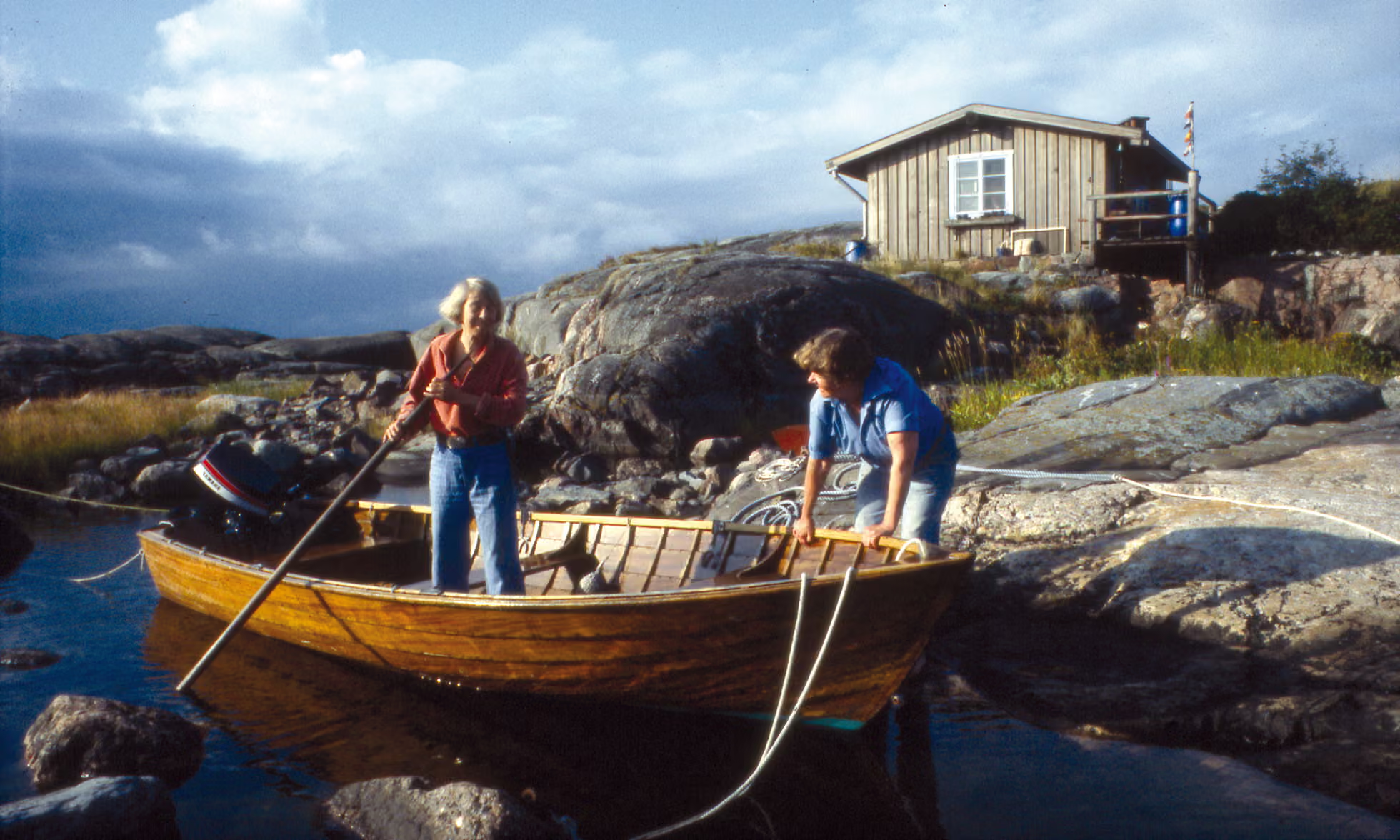
something in this image calls to me
Taking Deleuze and Guattari’s infamous framing of the Body Without Organs, we can better unpick these objects for what they are. The Body Without Organs6 suggests a container with no directly drawn connections, but that allows us to group things by their abstract relations. I find it a useful theory for grouping information by vibe, to then try understand why a set of things may all encompass a certain type of energy. Capitalism puts a heavy emphasis on the object as medium for self, hence the particular emphasis on selling lifestyles in the advertisement of say, a soft drink. This isn’t a particularly original analysis, but when we use the Body Without Organs as a tool to explore the relations that this object has (particularly in relation to ourselves), we can see past the advertising to look at the desire itself, as something multifaceted and nested in a landscape and from there ask why. You don’t want a soft drink, you want the feeling of a sunny day, in all the possibilities that it entails.
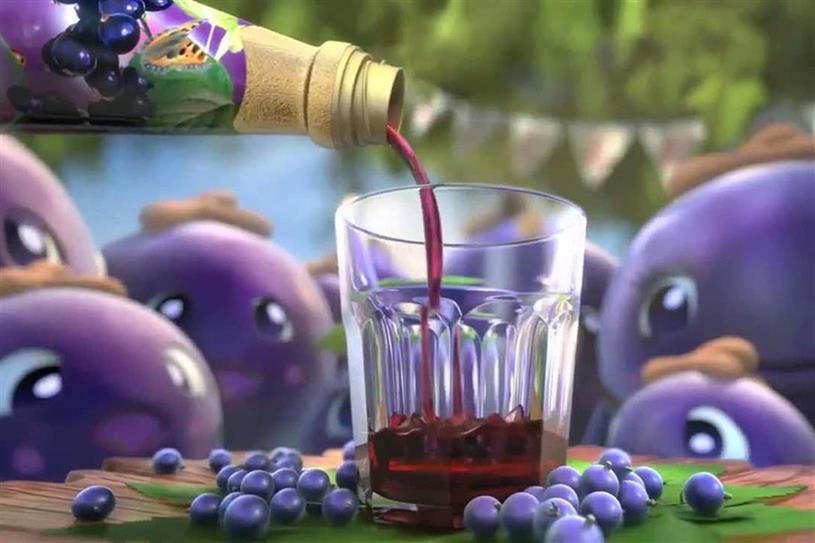
i hated this advert growing up but its an easy example for those who have seen it
In Pedagogy of the Oppressed, sexiest philosopher of the mid 1900s, Paulo Freire sketches the outlines of a socialist society predicated on conflicts of desire. Here he draws attention to the ways that a freedom to desire, unbound by constraints of capitalism, is central to a free society. However conflicts are rife when authentic desire is present, these frictions and conflicts being at the centre of the collective and collaborative, with navigating them is a core concern of living. A pre-conceived idea of a socialist system leaves out the requirement of balancing and being open to the bubbling and frothing currents of collective desire. Its non-linearity, its lack of rationalism and its unpredictability mean that the future must forever be foggy and unclear and that giving it a set destination represents a form of control. Socialism is about fostering productive conflicts that allow for growth and learning, whereas fascism tries to strangle the future into the imaginary ideal of progress.
I like to think of this framing of the future as a landscape of desire, one where through the desire for something singular, we can encounter hidden and latent desires in its path. Desires that are unpredictable and complex, even in conflict with one another, and thereby bring about a world that has room for the uncertain or fuzzier connections. A world that, more importantly, holds space for others’ landscapes of desire. Rather than situating these things within objects, competitively sought after and undernourishing in their acquisition, we can look at the wider whole that they represent, making it easier to place them among others. To come back to my earlier analogy, if everyone is arguing over what restaurant to go to, it’s easy to lose the fact that what everybody truly wants is to go to a restaurant.
23.03.2026 - objects and landscapes
-
https://myfriendpokey.tumblr.com/post/705461201521573889/personal-aesthetics ↩
-
Agnes talks a little bit about it here in her essay What Can An Image Do? https://www.are.na/editorial/what-can-an-image-do ↩
-
In ways it feels related to the topic but I’ve found a hard time justifying it within the wider context of the talk, but equally like it is somehow key or integral to understanding my thoughts on social art. ↩
-
I’m centralising capitalism here as if it is a singular, concious being, one that has desires of its own. While this format is helpful here in generalising capitalism into a set of autonomous systems, upheld through mutual belief, I’m aware that to do this more broadly sets up dangerous blind spots. ↩
-
Of Moomins fame, althought I would highly recommend her book Fair Play, for a beautiful take on conflict, difference and love. In it, she frames her own relationship through its conflicts, particularly drawing the relation between these moments and experiences of true love and companionship, framing love as tolerence of difference. ↩
-
Not a definitative reading, just a productive idea of it that I came up with to try make some use of the theory. ↩