home
posts --
Let me start by laying the foundations of my context through the names I have taken. I was born Andrew Denis Egan.
Andrew; after the patron saint of Scotland, a nod to my mothers heritage, born in Peebles, a small town somewhere between Glasgow, Edinburgh and the border.
Denis; after my grandfather, from Dublin, who had passed a year prior to my birth and to whose passing I owe my existence.
And Egan; a common Irish surname, taken from my Dad and originating somewhere on the West coast (though my family are from Dublin and Mullingar).
My parents ultimately settled on calling me Drew.
Drew; shortened form of Andrew, with a softer connotation, more playful.
To quote my mother on the decision: “I wanted Drew, but your Dad said Andrew Denis Egan sounded better”. This conflict moved back and forth during my childhood as I shifted between Drew and Andrew depending on my age and marking the respective influences of my parents.
The next name I chose. In 2019, I changed my name via deed poll to Dee Kathleen Egan.
Dee; because I wasn’t able to fully let go of Drew. It also felt maybe easier, with less friction for friends who were already struggling to understand me.
Kathleen; as a switch from Denis, it was my grandmother’s name. Another grandparent I never met, as she’d died a week before I was born.
Egan; see above.
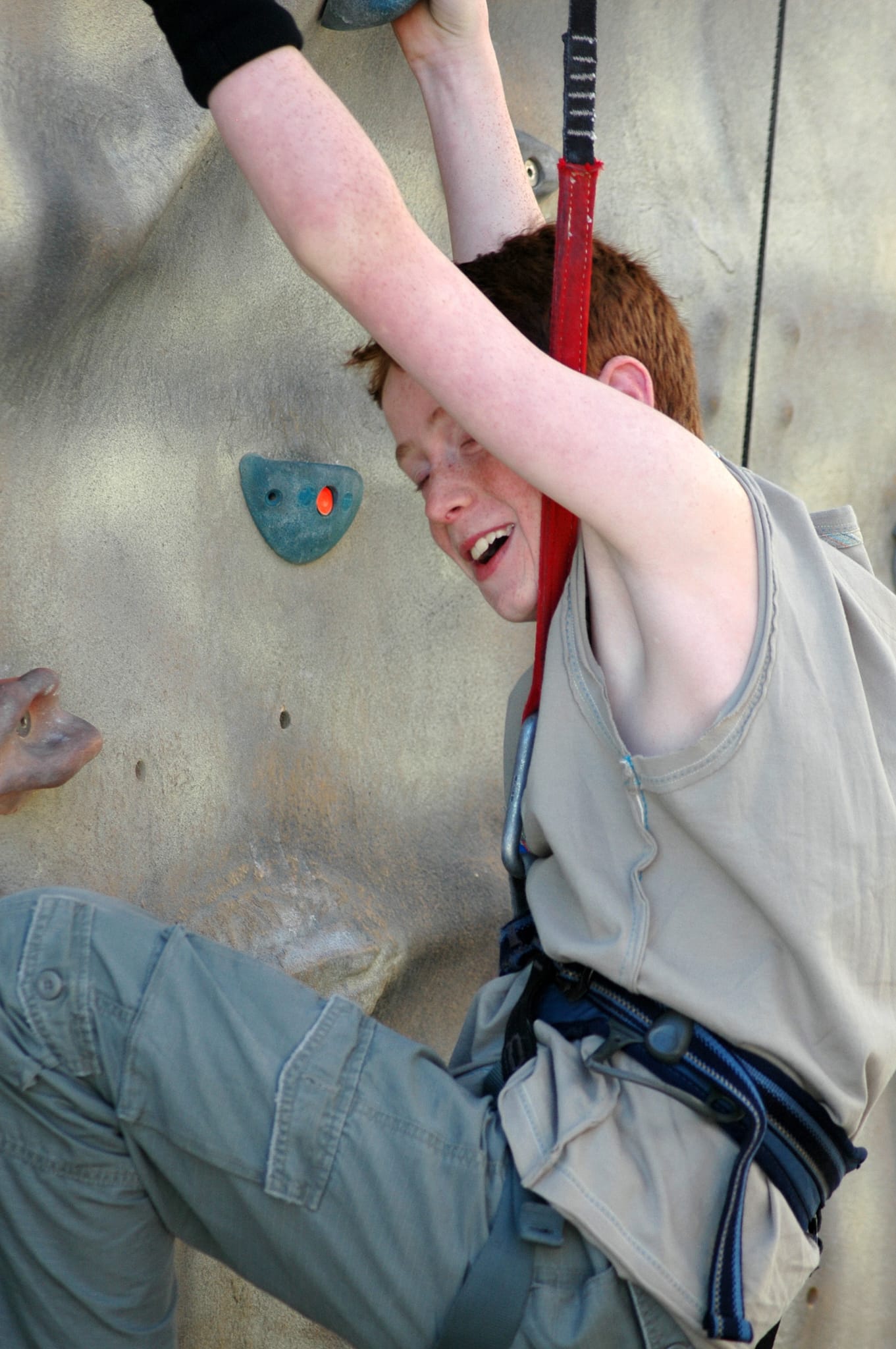
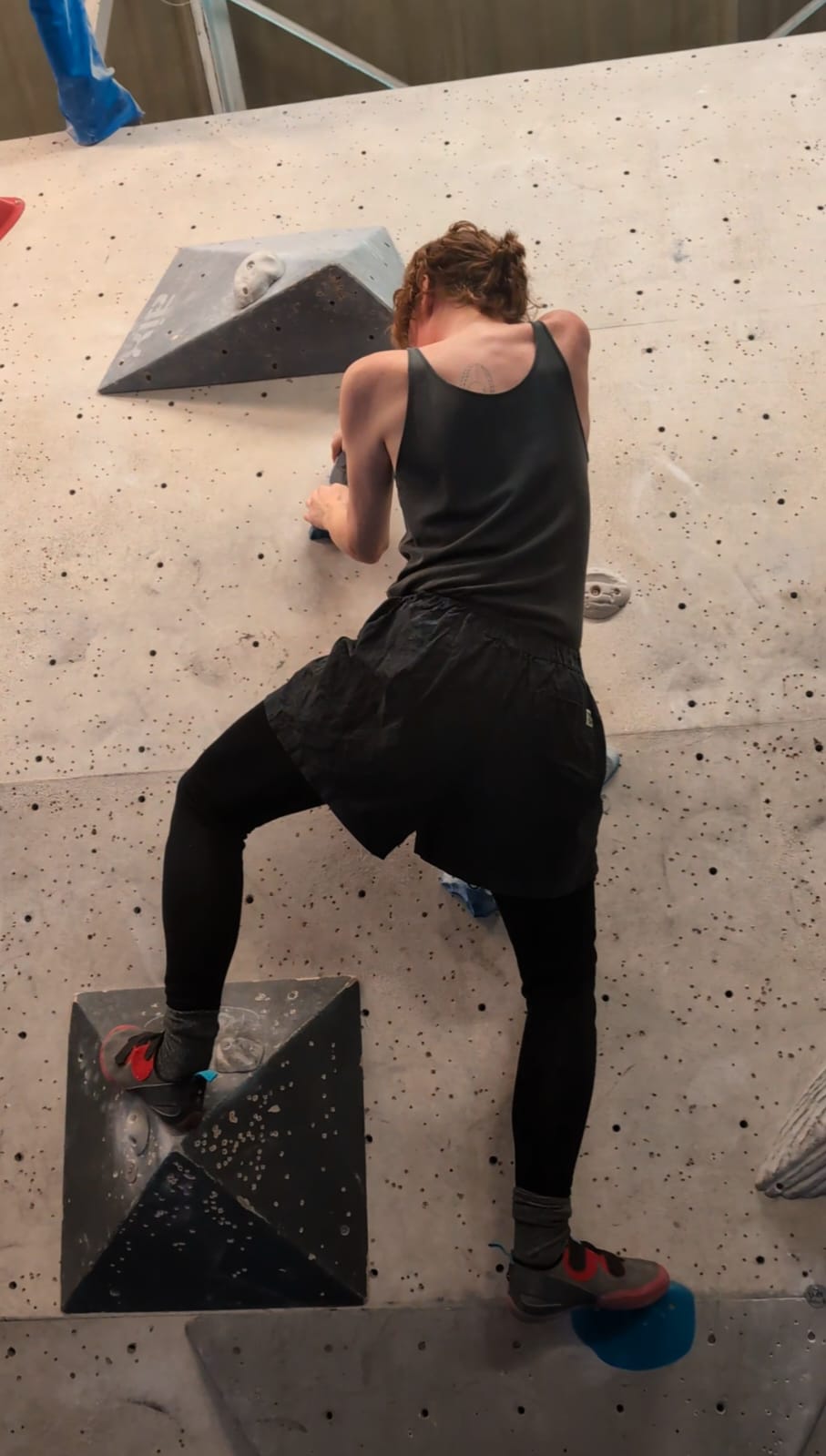
Me circa 2006 and me 2026
For those who haven’t gone through the process, getting a Deed Poll in the UK is relatively simple, although complicated through misinformation and minutia. To change most forms of ID, you would only need to print off a Deed Poll template and sign it, along with a nominated witness. Depending on your access to a printer, this can take an afternoon at most. But for other forms of ID, you’ll need to employ a service, which sends the form to you –> you sign it –> send it back –> they make copies –> it returns to you. Several weeks. Most people opt for the first out of expediency and less bureaucracy. However, some services, despite stating otherwise, will reject this simple version, forcing you towards the second option. Once these forms are returned it’s up to you to send out copies, informating the relevant services as to your name change.
This process takes weeks, regardless of which Deed Poll method you follow. During this time, your name sits in limbo, you are both Andrew and Dee and neither. Some records reflecting the change and others not. You get very used to having two names. Two different contexts through which you are known. One being the context you are in the process of unmaking and the other being the one being made. Now this process doesn’t end. For access to healthcare and other state provided amenities, you get used to juggling contexts through which certain services understand you. Some things (like the Disclosure and Barring Service (DBS) checks) have to understand your full context, even after you’ve done your best to obscure it.
In 2022, I shifted my name once more, settling on Kat (or Kathleen) Macdonald.
Kat; I had been testing the name a little and, after a woman I was sleeping with questioned which to call me, it stuck.
Macdonald; my mothers maiden name. She had begun using it after the divorce and I felt it was an appropriate shift to keep the balance between Irish and Scottish names.1
In tracing these relations, I wish to approach the process of renaming from a more holistic perspective. We often talk of renaming as a claim of power, a reinvention, an emancipation from something that is oppressive. We are choosing our own selfhood. Making ourselves into the people we wish to live as. This process has a pure beauty to it, but in framing this process purely through the potential of its remaking, we miss the way it also removes context. Without the referential lineage of the names I’ve claimed over the years, you lose the context those names represented. Some I intentionally wanted to obscure e.g. an association with masculinity and a patriarchal relation to my fathers family name, but others are more accidental. I lose claim to work I’ve made before 2022, I lose school records, long lost friendships that are only identifiable under my prior name, I lose access to certain forms of healthcare (those exclusively required for the upkeep and health of my more masculine organs), I am losing something in this remaking of context. It’s a trade.
–=–
As a trans person, the power of names becomes clarified. I’m more likely to get passed over on job applications under Kathleen Macdonald than Andrew Egan (despite 8 years more experience). My medical records are a mess due to name related clerical errors when my new NHS number was made. I have passports and school records in multiple names, entire social histories contained in the different contexts for which I still must highlight different names. Within trans culture we refer to past names as “deadnames” but this is a facility, albeit a comforting one. Similar to arguments of blue-brain pink-brain as a convenient answer to the question of why we are trans, “deadnames” are an easy way to convey the intensity with which it is unpleasant to hear them uttered. As it turns out this intensity of reaction renders them very much alive.
Using Ursula K Le Guin’s short story, The Rule Of Names,2 I wish to lay out another framework for thinking about conventions of naming and renaming. She says it rather plainly, when the old wizard, Mr Underhill, interrupts a class of children discussing the titular ‘rule of names’: “the name is the thing… and the truename is the true thing… to speak the name is to control the thing”. As it’s presented in the text, Le Guin uses ‘truenames’ as an analogue for birthnames, with characters abandoning their truenames upon reaching adulthood.3 Weaving slightly back to the real world, certain clerical services require knowledge of your birth name. This is usually as part of a safety process, to help understand your full context, i.e. if you have a criminal record or any details under other names that might require further look or consideration. This is largely for the same reason that Le Guin focuses on in The Rule Of Names. To gently spoil, Mr Underhill (so named as he lives under a hill), hides a dark secret obscured by the islanders not knowing the context of his ‘truename’.4 The power of a birthname comes from how it reveals the wider context of a person. Names are a container for understanding a thing through its history.
Deadnames have power through the way in which they reveal a context that has been obscured through the process of renaming. It’s a sinking feeling when someone deadnames you around others. Like the unwitting witness to the deadnaming, now knows a forbidden knowledge about you.
The worldmaking inherent in renaming something, doesn’t equate to the boundless potential that is so often over represented in the marketing of ‘the new’. This formulation plays into the lie inherent to the ‘innovation at any cost’ thinking of life under Capital. The potential of renaming exists in how it allows you to omit or remove context, thereby creating an edited history of oneself, through this filtering of information. We are changing our echo or the wake of our life, by making different sounds or moving in a new way. But this alone doesn’t affect our current path, only dictate the difference in how these patterns intercede with our current course. We change names to impact our resonance, but we also make deeper choices which truly affect our future. I worry that in focusing on worldmaking, we potentially leave behind the real work we need to do in acknowledging past context.
–=–
When Dutch art centre Witte de With announced a movement to rename the institution to Kunstinstituut Melly, director Defne Ayas claimed this as a movement to “acknowledging a blind spot in our institutional history and self-awareness”.5 The new name is taken from the artwork “Melly Shum Hates Her Job” by Ken Lum, an image that hung on the outer wall of the building for many years.6 Taking the specific claim of acknowledging institutional history (as it relates to the colonial history of Holland), the new name fails, whereas the old succeeds. The issue wasn’t one of obscurity, but what that name represented about the institution. In renaming itself, this relationship becomes further obscured. Making this point, I don’t wish to criticize the renaming, far from it, but instead I wish to bring greater attention to why we rename and what that process truly does. Kunstinstituut Melly represents one of the better examples with regards to the renaming of an institution - it was priorly named based on geographic location rather than funding - but this renaming does little to acknowledge the oversight of its original name. The casualness with which colonialism goes acknowledged but unaddressed in European society. Ayas makes this point clear when discussing this further, pointing out “naming art institutions after locations in a bid to affirm neutrality was a trend in those days.”7 Arguably we are still in “those days” and this new name does little to acknowledge the lack of neutrality affected by the institution. Melly Shum as a working class administrator certainly hates her job, but Ken Lum, the successful artist behind the piece likely doesn’t.8 In fact it’s hard to find much detail on Melly Shum at all. She was simply the basis for which others could project an idea of the working class. She is as representative of an actually existing working class within art, as the popular TV show, The Office.
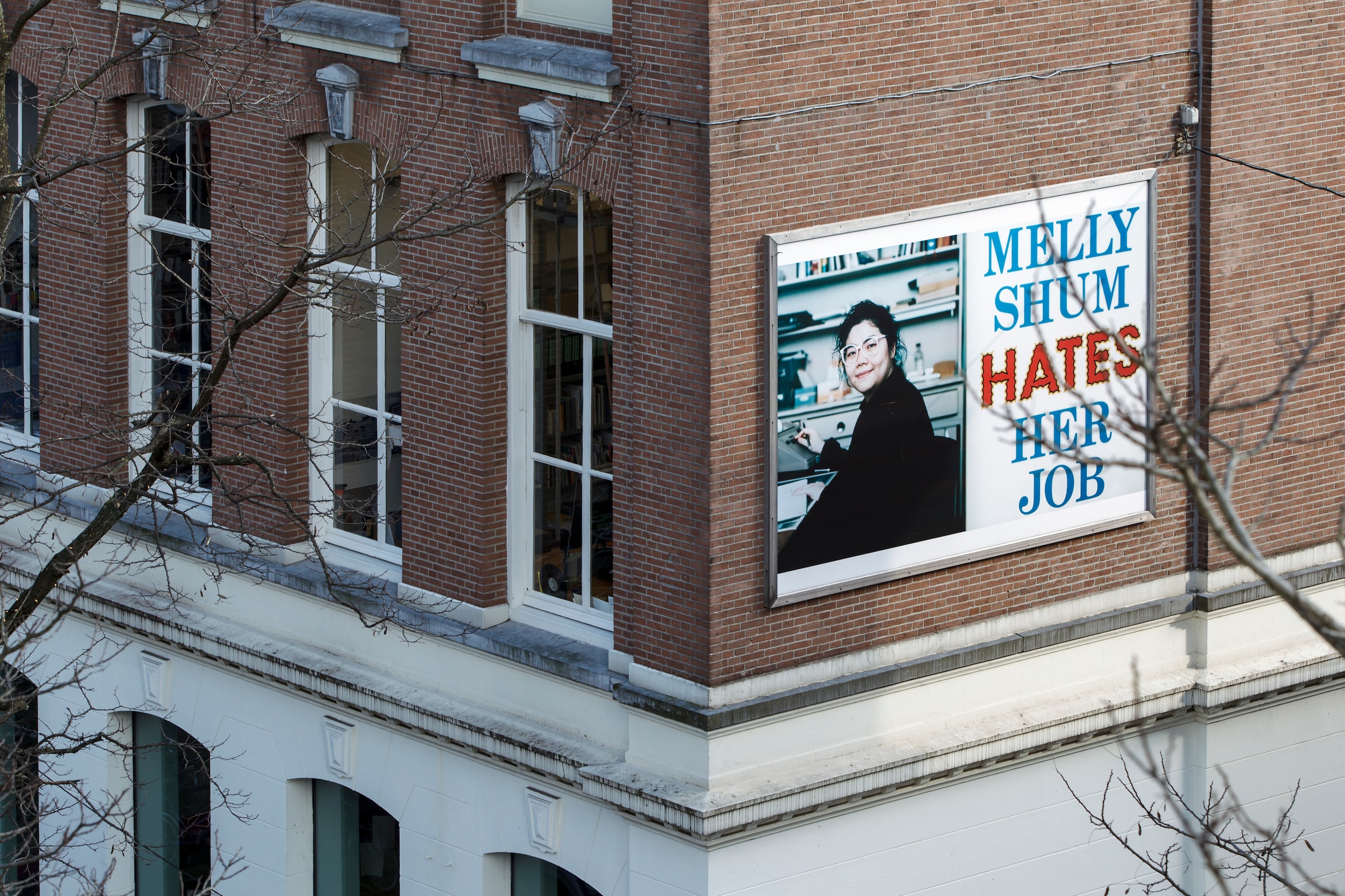
Melly Shum Hates Her Job
The public announcements around the process of this renaming fail to capture the context in which it happened. This process only took place due to immense pressure from artists and activists in Rotterdam. Only after direct action and the influence of a large-scale anti-racism movement did the institution remove its name and move forward with plans to change it.9 But this process of renaming does little to account for the institution’s failure to respond and what that delay communicates as to how seriously it might take internal concerns around equality and diversity from within the workplace. Interestingly missing from the website’s acknowledgement of its prior name10, is an accurate recounting of just how much unpaid work it took to pressure the gallery enough for them to finally relent. It’s additionally interesting to also look at how the name has been shortened. It is not Kunstinstituut Melly Shum, but just Melly. As a name, Melly is largely tied to the cultural contexts of European names, but the name Shum is often seen as romanisation of a few different southern Chinese surnames. What does it mean that one was acknowledged but not the other?11
–=–
This process happens consistently in relational dynamics. Take pet names in relationships. They remove the context of each other outside of our relations to each other. Part of this is bonding, it’s highlighting the intimacy of your intertwined context together. It’s like holding someone close. “Sweet dreams angel”12, is a regular evening mantra for many couples apart. It holds weight. It’s a small gesture of presence, even at a distance. An acknowledgement of togetherness.
The development of “idiosyncratic communication” to borrow from a popular study on the topic13, is a common part of establishing an us. A worldmaking that locks people together and helps in the building of a shared culture within the couple.14 Again, we like this context but in moderation. Sometimes an us is a helpful way of building a strong mutual support structure, but sometimes it can consume a sense of individual identity, eating at the foundations required to hold an understanding of yourself. It belays required moments of reflection and acknowledgements of past dynamics. The difficult act of processing your past. But saying, “I love you Kat” takes on a different meaning. It reaches past that shared context. It pulls on strands further reaching than just our relationship. It takes in the whole. The weight of the name holds all of the context that is embedded in that name. It becomes more than a hug.
In Jacques Derrida’s essay Aphorism Countertime, the philosopher centres names, particularly as they relate to Shakespeare’s Romeo and Julliet, as an aphorism of the self, “My name, dear saint, is hateful to myself, Because it is an enemy to thee. Had I it written, I would tear the word.” Here he identifies the infrastructure that a name represents. When one has lived with a name for any particular amount of time, it begins to hold a truth. A central pillar that holds up the context of a segment of their life. In the removal of that pillar, the context sinks down, obscuring it from view. In Romeo and Julliet both characters are bound by their context, but find liberation from it in the other. Their love doesn’t come about despite their circumstances but because of them. They cast off their names but despite this are still chained to them. Eventually believing death to be the only escape from their bindings. Ultimately, even this doesn’t free them. The play is centred on the interplay of context. Its very title describes its struggle, the dyad and the oppositional, represented through their names.
In focusing on just worldmaking, we are at risk of leaving behind parts of our context that are relevant or important to resolve. Unmaking is one part of this process but most things require something longer. A grappling with cultural context, be it class, race, gender or lineage, is integral to influencing radical and profound change. Sadly, I side with psychoanalysis in its emphasis on how our earliest experiences hold the key to current and future behaviours. This doesn’t mean forever chaining ourselves to those contexts, Fanon articulates this beautifully in Black Skin, White Masks, declaring “I am not a prisoner of history. I should not seek there for the meaning of my destiny. I should constantly remind myself that the real leap consists in introducing invention into existence. In the world through which I travel, I am endlessly creating myself”.15 But the quote articulates a man who has grappled with the history in question, it comes at the end of a book directly discussing the effects of dehumanisation on those oppressed under colonialism. Invention comes after analysis and understanding.
There is beauty in the unmaking of one’s context, a world making, however to make room for this new context, others must be unmade. This shouldn’t be missed in an analysis of this process. Destruction can be beautiful. It can be satisfying, but in it, you are still losing something. You’re still losing the world you priorly built for yourself. Deconstructing parts of the person you used to be. You’re living outside the contexts through which you’ve priorly existed. A choice that should never be made with one’s eyes shut.
24.06.2026 - living outside of context
more ->
-
The cultural practice of surnames reveals another facet of this context. European names often favour establishing the context of the father, thus establishing patriarchal systems through lineage. If we pose names as the answer to a question of identity, the question being answered by the surname in this context is “who is your father?”. ↩
-
https://www.are.na/block/43486101 ↩
-
I want to highlight that the use of ‘true’ suggests an objectivity to this process that complicates the point I’m making, especially as Le Guin relates truenames to birthname within the text. I’ll be moving between truename and birthname as synonyms but this does not suggest a sense of authority to this name over one’s chosen name. ↩
-
It’s a little more complex than this, but just read it to understand better. ↩
-
https://www.artforum.com/news/witte-de-with-center-for-contemporary-art-to-change-its-name-235623/ ↩
-
It depicts a woman of east Asian heritage, sitting at a desk, one hand on a notebook and another on a receipt printer. She gives a wired smile and the image is constructed opposite bright bold letters stating “MELLY SHUM HATES HER JOB”. As I write I have a picture of it up on my desktop and it keeps asking me questions; what does Melly think of this renaming? Did anyone care to listen to this? Allegedly she was asked her thoughts about this change at the time, however, official records come from the institution itself, so trust that as you will. Honestly, it’s a wonderful work to base a renaming after, but in this there is a repeated use of this work as an evidence of distancing, when ultimately the name wasn’t the issue, it’s what it stood for in the values of the institution. ↩
-
https://hyperallergic.com/witte-de-with-art-museum-decolonizes-name/ ↩
-
Or maybe he does? However, his choice of model, an ex-student, exists publicly within art only through the eyes of her former teacher. ↩
-
https://nltimes.nl/2020/06/12/anti-racism-graffiti-rotterdam-statues-art-center ↩
-
https://www.kunstinstituutmelly.nl/en/about#name ↩
-
https://ocula.com/magazine/spotlight/who-is-melly-shum-on-fka-witte-de-withs-name-/ ↩
-
“I love you angel” doesn’t feel natural to my relationship, though I know some people use it, but I believe my point can still be made with something that is often a stand-in for that statement. ↩
-
“‘Sweet Pea and ‘Pussy Cat’: An Examination of Idiom Use and Marital Satisfaction Over the Life Cycle,” ↩
-
https://www.scientificamerican.com/blog/mind-guest-blog/why-do-we-use-pet-names-in-relationships/ ↩
-
https://monoskop.org/images/a/a5/Fanon_Frantz_Black_Skin_White_Masks_1986.pdf ↩
Despite its placement directly on a large river bed, opportunities to swim in London are highly limited to the paid infrastructures of gym pools, lido’s and the ponds (specifically speaking the Hampstead Heath Ponds). Some of these are so-so but most of them are fairly great. Specifically the outdoor pool at Better Gyms ‘Oasis’ centre (near TCR and Covent Garden), is magical, with a sauna, garden and sunbathing area and even an indoor pool for when it’s too cold. The pool itself is fairly rudimentary and mostly built for laps, but the experience of swimming there is never undercut by a lack of things to do. It almost feels cut out of the yuppie culture of the 80s-90s with its cramped but aspirational sauna and its topless sunbathing balcony. At roughly £5 per entry, for a once every-so-often treat it’s not too expensive.
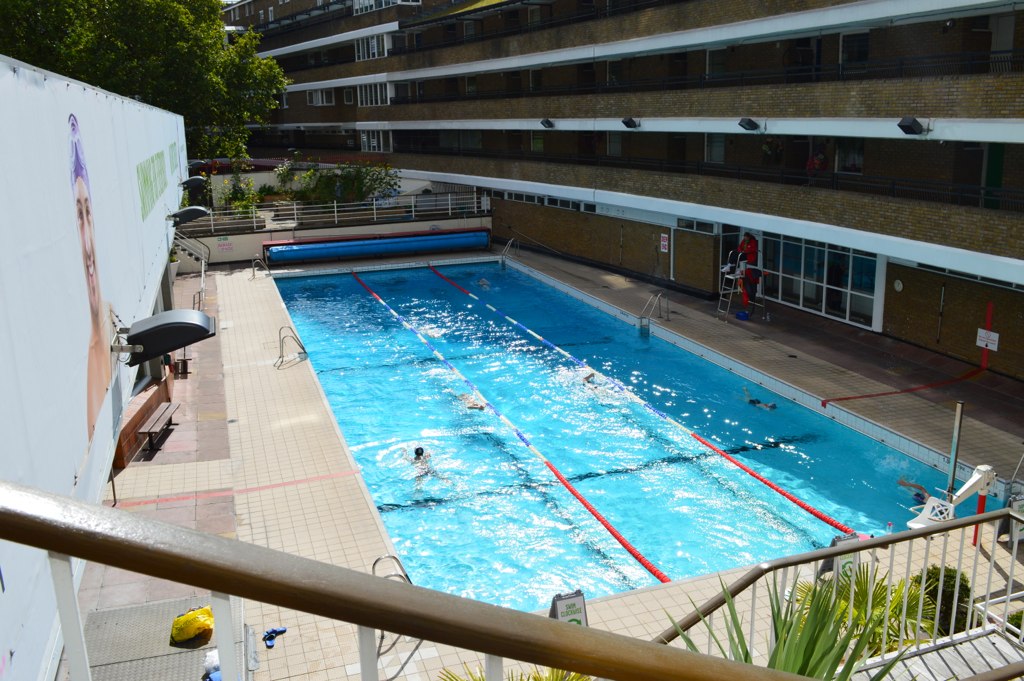
oasis pool
No doubt there are those that can afford to make the trip more regularly either through how they prioritise their budget, having a larger income or memberships. This shapes the social landscape of the space. On most days the pool is frequented by those working locally at various white collar jobs in the city and the chatter reflects that. It’s a great place to hang out and get to know what its like to work and live in London.
Other Better Gyms reflect their more suburban status. Wavelengths in Deptford is a great place for Sauna chat and hearing about the local celebrities. They amplify the social landscape and culture surrounding them, operating as a gathering point for cultural exchange. Like libraries, local stores and other spaces of everyday exchange, they act as, what Ash Amin calls, a ‘micro public’. A site of everyday social and cultural exchange, one which strengthens forms of community building and organising. However, despite this infrastructure being somewhat publicly managed (through the UK council system), these spaces aren’t public, they are spaces of private admission.
The Better brand (legally Greenwich Leisure Ltd) are a success of the private management model in the UK. A social enterprise organisation that grew from managing library and gym infrastructure in Greenwich, to quickly becoming the largest provider of fitness centres in London. Taking over the management and provisioning of social infrastructure from councils struggling to maintain them, they apply commercial strategies to keep them open and functioning, while making sure costs are still somewhat accessible. In terms of this type of privatisation, this is far from the most predatory. The gyms are nice, the spaces clean and the prices low in comparison to their fully private equivalents. All this to say, go use their facilities where you can afford it. They are more than worth it and do still serve a social and community focus.
But they are also emblematic of general changes in social infrastructure in the UK. Councils or government run institutions can’t afford to maintain services and so, rather than looking to provide better infrastructure in order to manage funding across the UK, the solution provided is that it must be privatised. This is visible across a broad range of institutions, from health services to power and water, even the public spaces and parks we gather in.
As observed by philosopher and social critic Simone Weil, we don’t value the social needs represented by our roots to a community and history. A part of the current malaise of rising anxiety, depression and isolation, is due to the way our society dehumanises and denies the need of the soul. We have a government that actively allows the literal starvation of its people, privatising access to housing and even access to reliable sources of food. What then must it think of our social needs, those fulfilled through spaces of social gathering and exchange?
This isn’t to simply move the responsibility over these things to government infrastructures. Shrug our shoulders and say “what could we do in the face of systematic issues?”. No this exchange is mirrored back through how we now view these needs. To trace an obvious contemporary connection to the words of philosopher Byung Chul Han, we live in a society that uses positive reinforcement as a cohesive force. We are encouraged to better ourselves through achievement and competitive factors, hustle culture and fitness, not for the emotional benefits, but to sate a craving to be more than what we were yesterday. The consequence is a lack of time spent seeing oneself reflected in the community that surrounds them. Not speaking competitively, but instead convivially. What if you weren’t unique and instead the same as everyone else and thereby worthy of not needing to always be taking a step forward? That in constantly seeking to move forward we are cognitively elevating and isolating ourselves from those around us, thereby stifling our spiritual need for roots and community.

this is the most attractive site on earth
Burgess Park is a large green space located just below Elephant and Castle in South London. In it, there is a fairly large artificially created lake. Currently it’s a private fishing pond leased out to a local fishing group, but speaking to one of the members of that group, he tells me that it was once a community outdoor pool. Kids from the local area would go swimming and hangout on its banks. Oddly I can’t verify this beyond first hand accounts but at some point it was filled with fish and hence was a registered fishing spot and people stopped swimming there. It went from being a public social space provisioning the community to something only accessible to those with a licence.
It’s beautiful that community infrastructure such as what is provided by Better Gyms exists and is still providing a space for connection, however, its privatisation and pay-to-access structure still isolates it to those that can afford to see swimming as less of a luxury and more as a social or spiritual necessity. My first memory comes from a public pool. From a swimming lesson when I was 4, what it felt like to crash into and under the water for the first time. The muffled soundscape of splashing and crashing around me. I still become that kid again when I spend time by the water and it fills a joy that is hard to reproduce outside of the feeling of slipping under the water, feeling the weight of the water and being totally at one with my body.
Maybe it’s silly to pick swimming as a social necessity, but it represents a point of conviviality that can exist outside of capitalist structures. Hanging out by the pool is important. Friends and colleagues more in touch with today’s late teens and early 20 somethings tell me that drinking culture is massively on the decline. People don’t want to go out drinking together anymore. On the one side this is a net good for health. ‘England has an alcohol problem’ has been an international joke for a while, but it really is true. However, there is a large amount of social and community culture in the UK built out of drinking. It was a space to talk and share ideas, political and non-political. Now people seem more interested in the gym, but are people really in community in those spaces? I wouldn’t really know, it’s not my scene, but the descriptions of my friends who paint a bleak picture of people mostly keeping to themselves.
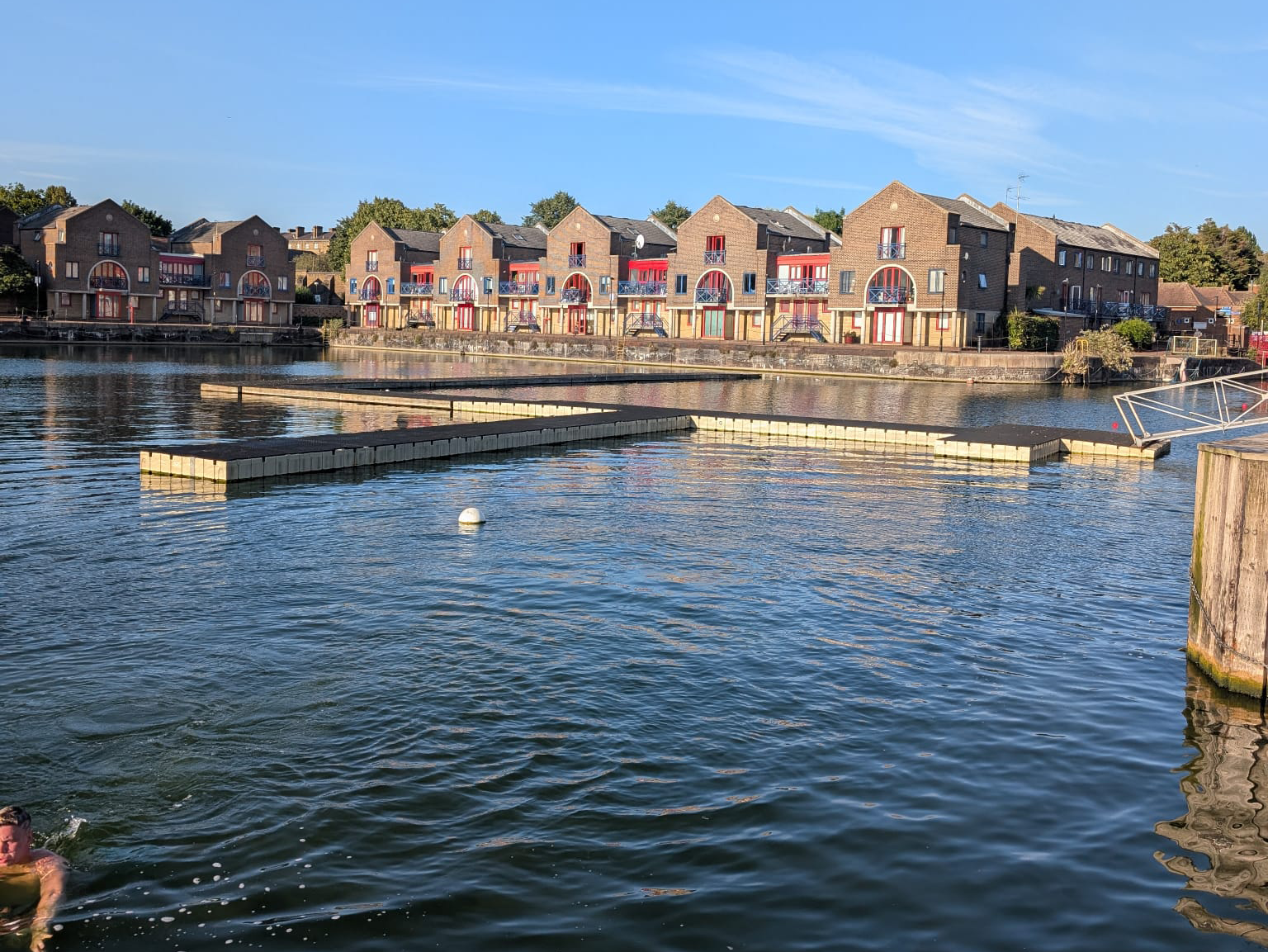
other spaces to swim
Despite the convenience of Better Gyms, my favourite place to swim in London is Shadwell Basin, a small dock just off the Thames, that explicitly bans swimming. The water quality is poor (at best) on a good day and it’s really best not to think about it. Everyday in the summer a random assortment of people from different parts of London gather, listen to music, cook and eat food and jump off the docks into the water below. It’s beautiful. Sometimes I don’t go to swim, just to sit and read in amongst this small community that has little in common beyond wanting a space to gather, swim and hangout by the water. It’s not lack of paid entry that brings me there, but simply how open and free the space feels. It’s never too crowded but also never empty, always buzzing with people excited to hangout and play around the water.
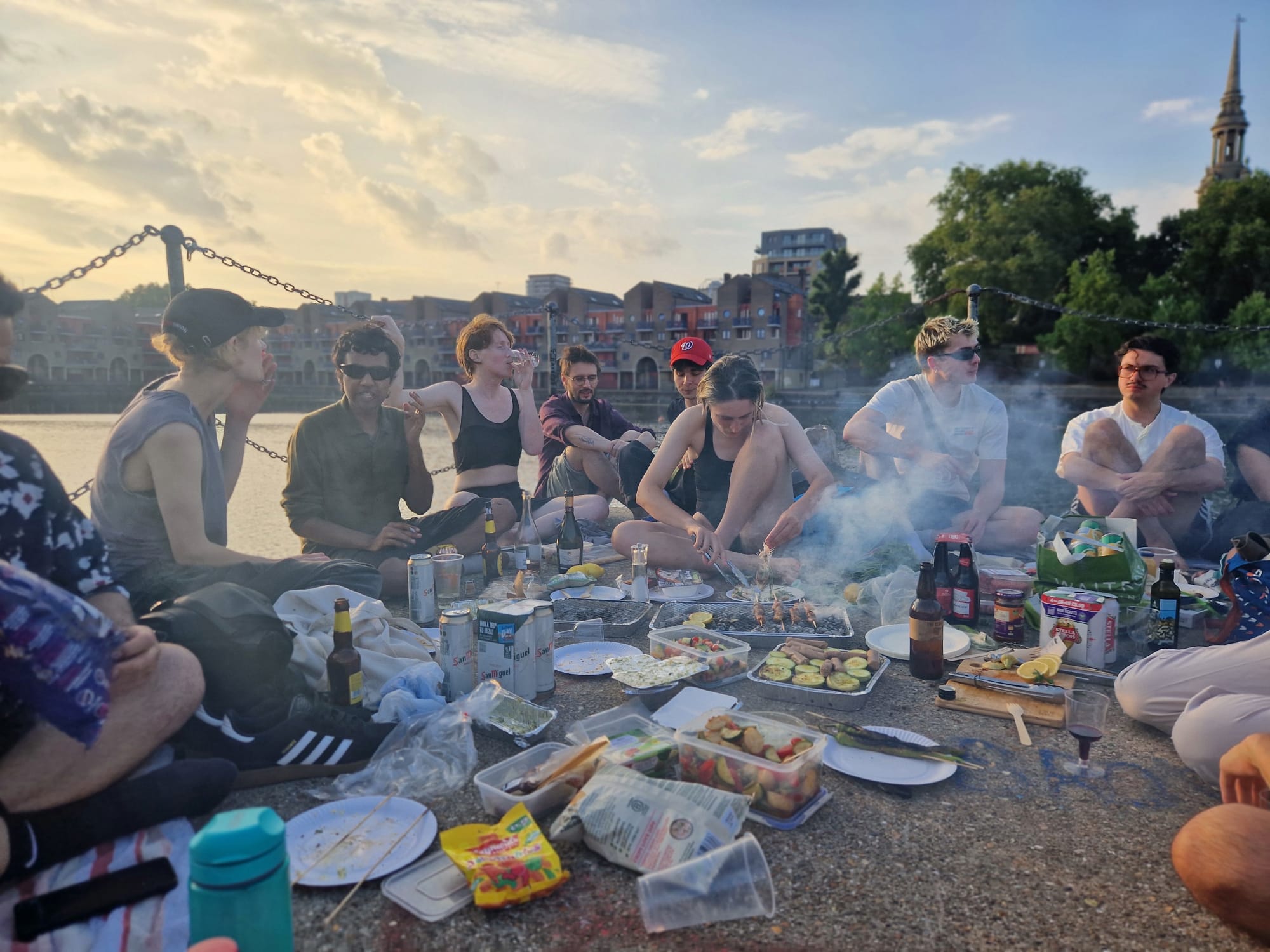
a pool party i had at shadwell basin last year
24.06.2026 - the right to swim
more ->
my body without organs - a brief attempt -- 23/06/2026Just over a year ago I started reading through Gilles Deleuze and Félix Guattari A Thousand Plateaus (1980). I never finished it. I began chronologically, but upon getting to The Geology of Morals with its stratums and substratums, I then skipped around, roughly covering maybe 5-7 chapters in total. Regardless, I loved the idea of The Body Without Organs and grabbed a loose (but useful to my own work) definition of it.
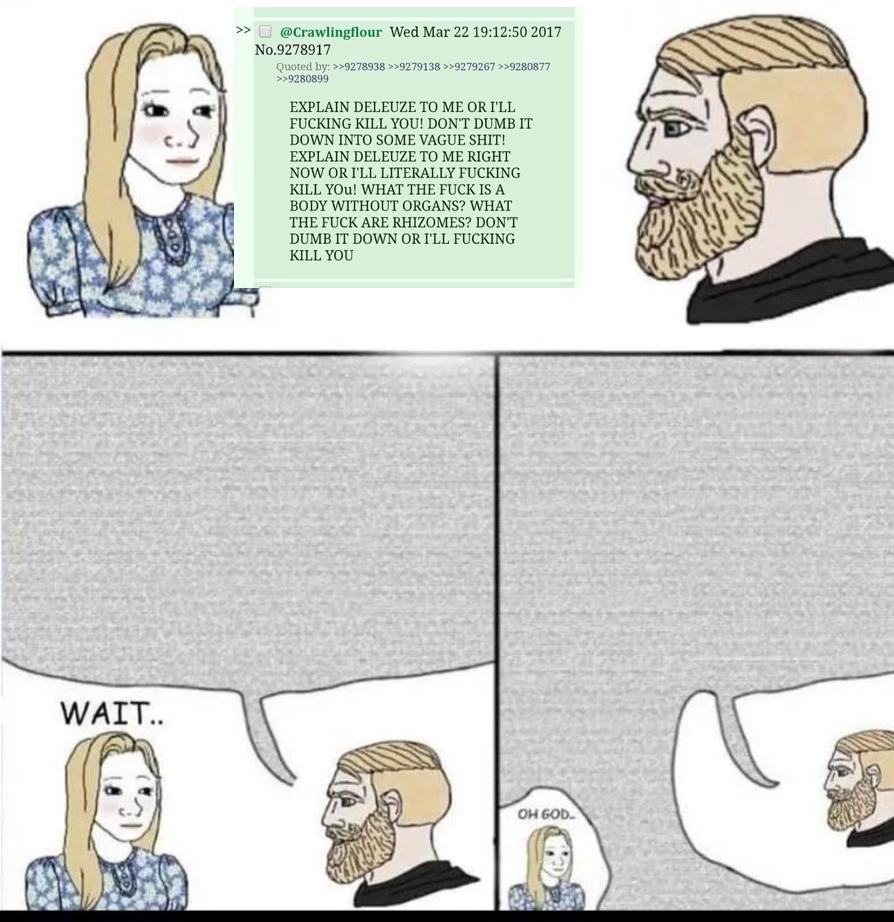
there is a lot of memes about this online
In this post I want to try to outline my understanding of The Body Without Organs, perhaps as a kind of ground level reasoning rather than anything holistic or exhaustive. I want to really highlight that this isn’t supposed to be definitive. Over the course of A Thousand Plateaus, the concept shifts and changes to embody pretty much whatever it needs to for the analogy they are making. This is more just something to maybe start with and build off of if you are working with the term for the first time or trying to make your own attempt at reading it.
To start The Body Without Organs despite its allusions to the material, is more of a lens and less of a tangible ‘thing’ or ‘infrastructure’. It operates more as a thought exercise, through which one can encounter interesting relations. The Body Without Organs is a form of open ontology. Pulling from container theory, it’s a way of gathering and understanding information. As an exercise, get a piece of blank paper and write say; land, suncream and portraits. Leave lots of space between them and lots of room at the sides.
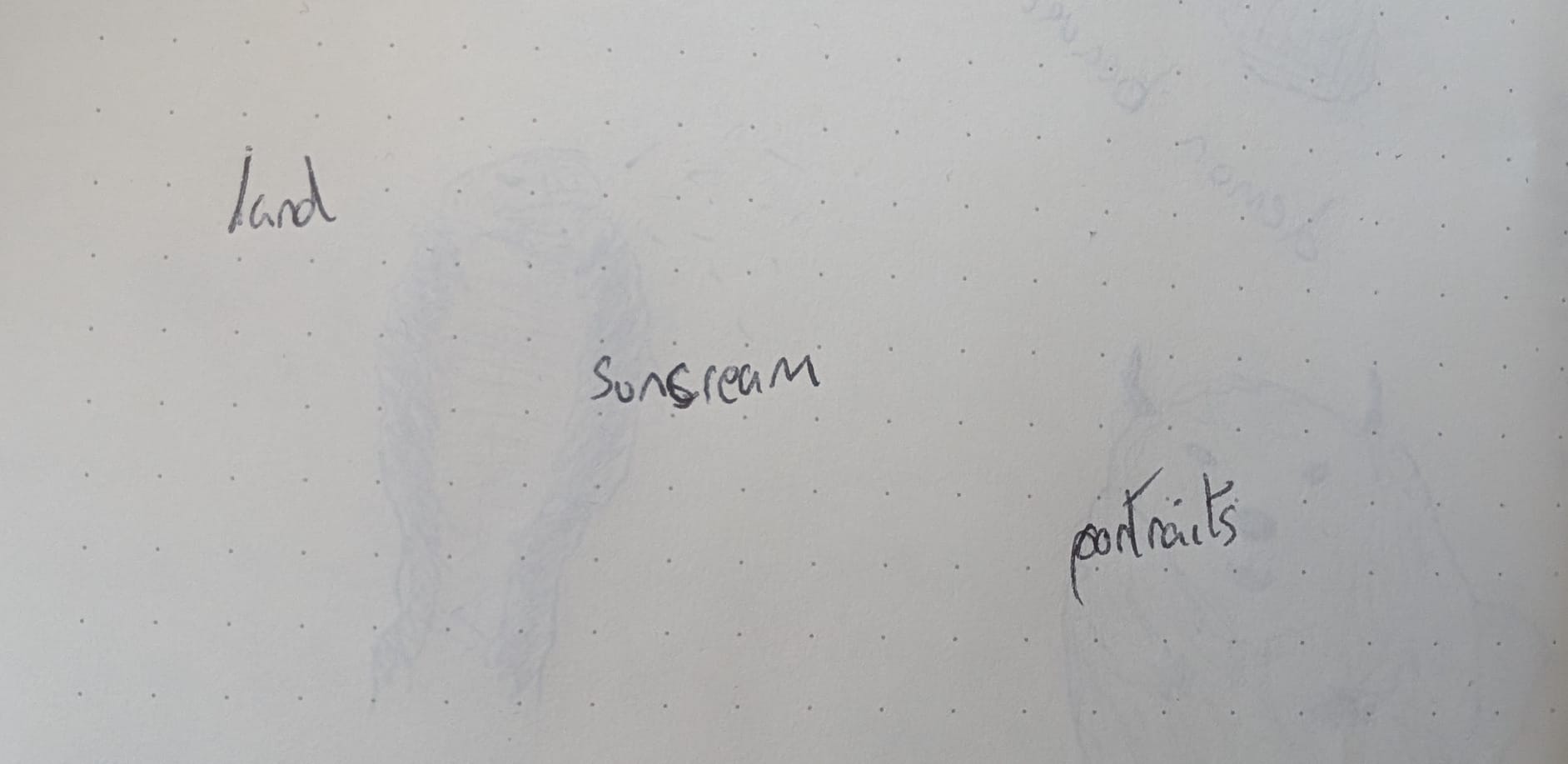
example
Now, add other elements to this page, either from what’s around you or other elements. Remove any lines or links between these data points and add yourself to the page. What you’ve formed is A Body Without Organs. A set of information, not pre formed around their relations but instead fragmentary. Now that they’ve been brought into conversation with one another, you can start building loose relationships, and through that some kind of meaning can take form. Let’s take suncream and portraits. Both are often oil based, there is an almost painterly way that sunscreen is applied and both centre somewhat around the idea of masking the self, either through interpretation or physically. We can keep going but the idea is that there is no concrete or one logic to the grouping, it’s multifacitied and open to discovery and curiosity.
A Body Without Organs is literal, it’s a structure that has no binding or core framework, something where information is prioritised equally regardless of how tangential it may be. This idea was building in contrast to the rigidity of Freudian analysis. In Freud’s conception of Psychoanalysis, everything is rooted by core archetypes (eg. the mother and the father), which then define their surroundings. But in The Body Without Organs, we want to break out of those constraints to find other connections and forms of knowledge, mimicking communism’s drive to equalise people through their labor, Deleuze and Guattari seek to equalise information in its analysis.
In The Body Without Organs, relations are not hard bindings but instead something to loosely tease out and explore. There is also no true border for this information, as it requires that one can bring anything in from outside that space and so find relationships between information already present. All conceptualisations have some form of link, but the point of this exercise is to try to shake off easy or socially constructed relations, to instead find something ‘new’. To ‘think outside the box’ so to speak. By no means is this done from a top down position, but instead, you yourself are immersed within these relations. When starting to trace faint lines between data points, you must also be able to understand your own relationship and how that might lead to how you view information. It’s far less about sitting back and viewing it like a blueprint and far more about sitting within it and feeling it out.
I like their image of the transparent map. A way of temporarily linking different concepts or ideas, without marking those relations as fixed or permanent placements on a grid. The impermanence is important here as without it, it quickly becomes its own set of predeterminate relations.
It’s a helpful exercise to do when you are feeling trapped by cultural or social contexts, to pull the information all together into one space, to let it breathe before expecting anything from it. Umberto Eco extols a similar philosophy in his book The Name Of The Rose, where his protagonist, William of Baskerville, admitting to the potential of false relations, addresses our POV character and states “ instead of conceiving only one, I imagine many, so I become the slave of none.” It’s a similar philosophy, instead of searching through information, seeking a ‘true’ relation between different data points, we can instead open ourselves to the potential of a diverse set of relations.
This interpretation is by no means holistic, or even correct. However, when dealing with philosophers like Deleuze and Guattari a productive definition or interpretation is far far more valuable than something pursuing a ‘truth’. A Thousand Plateaus famously ties itself in knots, contradicting itself or adding new qualifiers of to what ‘A Body Without Organs’ truly is. Some of these bring up other interesting questions, but the base layer - a lens through which data points are presented abstract of a hierarchy - feels an interesting enough concept. Like a field of possibilities, but one in which you are immersed rather than detached.
23.06.2026 - my body without organs
micro publics and spaces of social reproduction -- 04/06/2026I began working on micro-publics as a response to the question of what positive or hopeful futures do the radio practices of the 1970s and 80s cast forward? What was it that made those works hold our collective imagination of a socialist potential of the present and future? Ultimately, my response was to follow in their footsteps. To deprioritise the radio and instead look at the people, what they said and what they saw in the practices enacted.
Ash Amin coined the term micro publics as a response to racist talking points of the 1990’s and early 2000’s. An urban theorist, he saw localised and national plans that reinforce community boundaries and identities as arming racist talking points around who had claim to ‘Englishness’ as a community identity. His counter was an increased attention on micro publics, localised social spaces that are rooted in everyday cultural exchange’s; youth centres, parks, schools, cafes and community gardens.
micro-publics was about centering Deleuze and Guattari’s idea of a “molecular revolution”. Focusing on what it means to make small and meaningful changes in the world, against scalability or dreams of grand and sweeping changes. micro-publics isn’t about sitting and waiting for a revolution or a wider movement to change the world. It’s about the revolution that’s present, the work being done and work still to do now. It’s about opening things up, ourselves, our eyes, our scope, our desires and putting them into the world.
It’s about wanting and seeing where that exists or can still exist. Looking both at our feet and at the ground around it, searching for others feet nearby.
micro-publics is a reminder that politics lives and breathes in the streets and on the pavements. It’s about the importance of regularity and the banal or mundane. That love is fostered and deepened through these repeats. It’s a reminder that the potential for these repeats are everywhere. It’s to say that the man in the grocery store is your neighbour, he is a friend, his a loved one and should be treated as such. He can be curious too and you should let him be. Be curious back.
It’s about the labour and importance of social reproduction. It’s about unpicking the pretence of power and aesthetics of authority by taking political discussions out of the gallery, the lecture theatre, the discourse space and into the street. Where it lives and truly breathes on contact with the living world. To enact a living politics in the people present. It’s about, where productive, bringing public space and it’s people into the gallery, the lecture theatre and the discourse space. Claiming back those spaces and making them spaces of exchanging more than just money and power.
It’s about selling apples in the gallery and making art in the grocery store.
The first iteration of micro-publics debuted as part of In/Human Infrastructures by Xeno-Futurism and taking place on the street outside Gossamer Fog.
04.06.2026 - micro publics and spaces of social reproduction
what would it take to make that now? -- 27/05/2026I saw the Wooster Group perform the other week at the Cornet, the type of theatre its so rare to see getting made nowadays. With all the hallmarks and energy of that period of the 1970s in which everything new in art seemed to be happening in New York. Coming out of the theatre we decided to walk off our pent up excitement, tracing past Hyde Park and then into Soho, myself lost in nostalgia for my own background in experimental theatre, and Yasamin with a longing to try recreate it somehow. We both reached a conclusion that this type of work just can’t be made in London anymore, not because it’s not the 1970s or it’s not New York or we don’t have the same kind of training, but simply that it seems impossible to get the kind of freedom and space they had to make it.
For much of the past ten years I’ve been obsessed with the culture and work that came out of the 1960s-1980s New York experimental art scene. Your Tina Girouard’s, Yoko Ono’s, Teching Hesih’s and Philip Glass’, even going so far as to make multiple works in conversation with two of those names, the most overt being 2022 - 2023’s I Love Or Hate Everyday, which was an interpretation of Hesih’s One Year Performance 1980–1981, or Time Piece for short. While making that work, I constantly felt the difference between our conditions when making these supposedly similar works. Mine constantly had to bend and fit around my day, truly taking place in the gaps between photos, while Hesih didn’t have to interact with the pressures of work and life admin. He spent an entire year just on this one piece, secluded from concerns around rent payment and the responsibilities of a job. It became a constant nagging of “if only, if only, if only” and felt like a stark reminder that times have changed and the lost of living has only ever gone up.
Looking at reviews of the recent Wooster Group tour, people seem to agree, you can’t make this type of art in this type of economy. Largely I agree, the price of space is astronomical (more than £200 a month for a studio space seems criminal) and most artists must be working at least a side hustle if not two, just to keep a roof over their head. But something within this forfeit seems overly pessimistic. What if, if not materially, than spiritually, we could recreate something of the magic produced under those conditions.
Running several of my own projects and groups that lie outside of structures of institutional support (LCLO and Temporary Space), the expectation that one can make any money from this feels squarely off the table. It’s impractical and feels frankly naive to go into it with any kind of expectation other than that you’ll spend far more than you’ll make. But did the Wooster Group start as a business venture? I highly doubt they felt lucky or indebted to the wider economic system that they were founded within. The 1970s in New York was notorious for its lack of support or funding for artists. While maybe not as foolhardy as it seems now, becoming an artist during that period was just as difficult and unstable. As the recent film adaptation of Linda Rosenkrantz’s 1974 interview with photographer Peter Hujar beautifully paints, artists of the 70s also spent most of their time worrying about invoices, rent and who knew who.
So what would it take to make something spiritually similar to the Wooster Group today? Fine space is at a premium, but then why not host it in the park or the street? Or even your living room or bedroom? It would be remiss of me not to highlight that these settings also were big textual considerations of the day. While you would lose some of the advantages that a regular rehearsal space and a stage gives in terms of props and materials, that loss also brings its own set of advantages and textures to play with. While we can look at some of these works as impossible feats of days gone by, they all started with broadly the same question. What would it take to make something that came before but with our budget or reach? And how can we make the most of that difference?
27.05.2026 - what would it take to make that now?